For parents ·
What emotional regulation means for parents
Emotional regulation is not a child being quiet. It is a child who can notice a feeling, let it move, and find their way back to a steadier body.
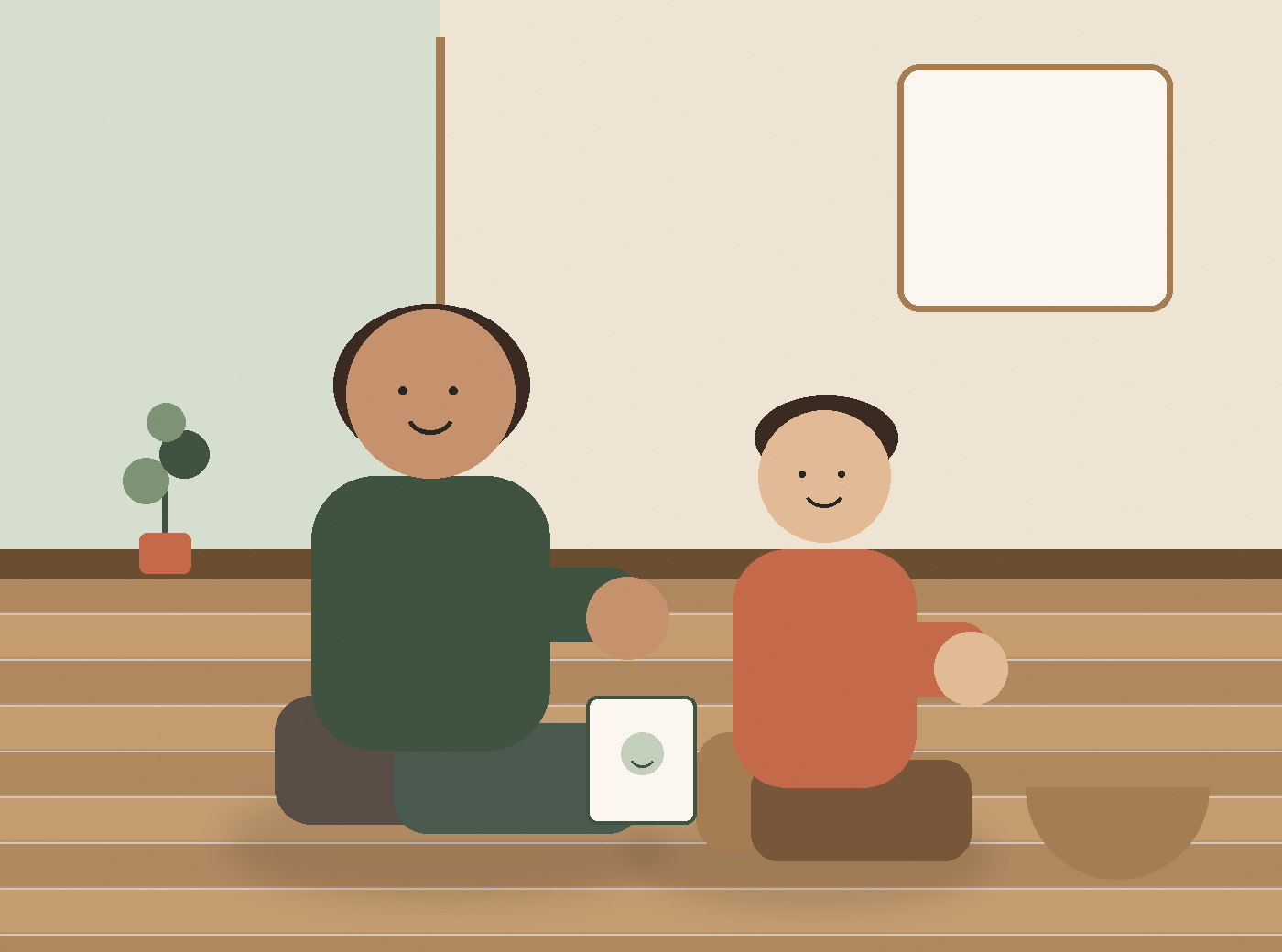
Parents often meet this idea when a morning has gone sideways. The shoes will not go on. The voice gets loud. Everyone is late. It is easy to wish the feeling would simply stop. Regulation is slower, and kinder, than that.
What it is
It is the skill of coming back. Body first: heart, breath, hands, jaw. Then a name. Then a small action. Then the room can carry on. A child can do what you asked and still be flooded. A child can say no and still be steady if they can stay with the no without hurting anyone. We are not training a performance of calm.
What gets stuck
When a child does not have a way back, the feeling stays in the room. Play stops. Food waits. Bedtime takes longer. That is hard for the child, and it is hard for the people who love them. Naming that is not the same as blaming the child, and it is not a verdict on the parent. It means the house needs a tool, not a speech.
What you can do this week
- Pick one phrase: “Your body is having a big feeling. I am here.”
- Pick one tool: three slow breaths, a squeeze of a cushion, or a walk to the corner.
- Practice when nothing is wrong. Thirty seconds at the table is enough.
- When it is hard, use the same words. Save the lesson until the body has settled.
Ages, loosely
Around three, the name can be one word: mad, sad, glad, scared, tired. Around five to seven, you can add where it sits. Around eight to ten, a child can often say what they need: space, a hug, a drink, a minute. None of these ages are a test. Some days a ten-year-old needs the one-word version.
Teachers see the same pattern in a group. A corner in the room, the same four steps, and a grown-up who does not rush the return, helps more than a chart of faces with no practice behind it.
Regulation is a skill. Skills get built in ordinary minutes. You do not need a perfect morning to start.